


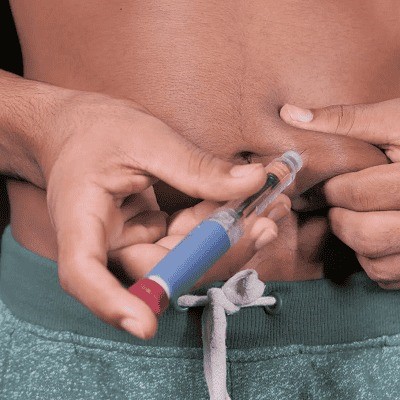
 Mounjaro (tirzepatide) has become an important prescription treatment for people managing type 2 diabetes, and questions about the correct injection schedule are common. One of the most practical questions is whether the weekly injection can be taken on a different day when a person's routine changes.The short answer is yes, Mounjaro can be moved to a different day of the week, provided there are at least 72 hours between two doses. Mounjaro is designed to be used once weekly, at any time of day, with or without food. The official medication information also states that a missed dose may be taken within four days, or 96 hours, after the scheduled dose. If more than four days have passed, the missed dose should generally be skipped and the next dose taken on the regular schedule.For people searching for the Best Mounjaro Injections in Muscat (https://www.enfieldroyalclinics.om/cosmetic-injectables/mounjaro-injection/), understanding how the medicine should be used is just as important as finding an appropriate treatment service. A safe treatment plan involves proper medical assessment, an appropriate prescription, correct dosing, and ongoing monitoring rather than simply choosing an injection based on availability.Can Mounjaro Be Taken on a Different Day?Mounjaro is intended to be injected once every week. However, the weekly injection day does not have to remain fixed forever. If a person's schedule changes, the day can be changed as long as the two injections are separated by at least three days, or 72 hours.For example, someone who normally takes Mounjaro every Monday may need to change the routine because of travel, work, or another commitment. The injection can be moved to another day if enough time has passed since the previous dose.The important point is that changing the day does not mean taking an additional dose simply to establish a new schedule. The minimum 72-hour interval is designed to prevent doses from being taken too close together.Mounjaro can be administered at any time of day, so there is generally no requirement to take the injection at breakfast, lunch, or dinner. It can also be taken with or without food.Anyone considering a schedule change should still follow the instructions provided by the prescribing healthcare professional, particularly if Mounjaro is being used alongside other medicines that affect blood glucose.What Happens If a Mounjaro Dose Is Missed?Missing a weekly injection is different from deliberately changing the injection day.According to the manufacturer's medication guidance, if a dose is missed, it can be taken as soon as possible within 96 hours, or four days, of the missed dose. If more than four days have passed, the missed dose should be skipped and the next dose should be taken on the regularly scheduled day. Two doses should not be taken within three days of one another.This distinction can help prevent a common mistake: trying to compensate for a missed injection by taking doses too close together.For instance, if a person normally takes Mounjaro on Monday but forgets and remembers on Tuesday, the dose may still be taken within the permitted window. If the person does not remember until several days later, the appropriate action depends on how much time has passed.When there is uncertainty about whether to take a missed dose, the safest approach is to check the medication instructions or contact the prescribing healthcare professional rather than guessing.How Mounjaro Works and Why the Weekly Schedule MattersMounjaro contains tirzepatide, a medicine that acts on both GIP and GLP-1 receptors. These actions can improve blood glucose control, influence insulin secretion and sensitivity, reduce glucagon levels, and affect appetite and food intake. Mounjaro also delays gastric emptying, particularly after the first dose.Its long-lasting action helps explain why Mounjaro is administered once weekly rather than every day. The medicine has an elimination half-life of approximately five days, which supports its weekly dosing schedule.Because the medicine remains in the body for an extended period, taking extra doses or taking doses too close together is not an appropriate way to accelerate results. More medicine does not necessarily mean better results and can increase the risk of adverse effects.For this reason, people looking for Mounjaro treatment in Muscat should focus on medically supervised use and adherence to the prescribed schedule rather than changing doses independently.Choosing the Best Mounjaro Injections in MuscatWhen searching for the Best Mounjaro Injections in Muscat, patients may encounter different treatment providers and service options. The most important consideration should be the quality and safety of the treatment process.A suitable service should begin with an assessment of the individual's medical history, current medications, health goals, and reason for considering tirzepatide. Mounjaro is a prescription medicine, and its suitability varies from person to person.The treatment process may include reviewing blood glucose control, existing medical conditions, previous medication use, and potential contraindications. The prescribed dose may also change over time according to the individual's response and the healthcare professional's assessment.People should also verify that the medicine supplied is genuine, properly stored, and obtained through a legitimate medical or pharmaceutical channel. Mounjaro should be stored according to its product instructions, and patients should receive appropriate guidance on injection technique and storage.A reliable treatment service should also provide clear instructions about what to do if a dose is missed, how to change the weekly injection day, and which symptoms require medical attention.Safe Mounjaro Injection PracticesMounjaro is administered subcutaneously rather than into a vein or muscle. Approved injection areas include the abdomen and thigh, while the back of the upper arm can be used when another person administers the injection. Injection sites should be rotated with each dose.Following the correct technique matters because improper administration can affect the treatment experience and may cause avoidable discomfort.Patients using a pen should carefully follow the instructions supplied with their specific device. A healthcare professional should demonstrate the injection technique when treatment is started, particularly for anyone who has never used a self-injectable medicine before.Mounjaro should not be shared between patients. If another injectable medicine such as insulin is prescribed, the medicines should not be mixed in the same injection. A healthcare professional can provide specific instructions for using multiple injectable medicines safely.People should also keep track of their weekly injection day. A phone reminder or medication calendar can be useful, especially when travel or changing work schedules makes it easier to forget a dose.What Side Effects Should Patients Know About?Like other prescription medicines, Mounjaro can cause side effects. Commonly reported reactions include nausea, diarrhea, reduced appetite, vomiting, constipation, indigestion, and abdominal pain.Digestive symptoms may be particularly noticeable when treatment begins or when the dose is increased. Patients should discuss persistent, severe, or concerning symptoms with their healthcare professional.Mounjaro also carries important safety warnings. It should not be used by people with a personal or family history of medullary thyroid carcinoma or by people with Multiple Endocrine Neoplasia syndrome type 2. Serious allergic reactions are another important contraindication.Anyone experiencing severe symptoms or a suspected overdose should seek urgent medical advice. The manufacturer's medication guidance specifically advises contacting a healthcare professional or seeking emergency care in the event of taking too much Mounjaro.Because individual circumstances can differ considerably, a treatment decision should be made with a qualified healthcare professional rather than based solely on online information.Making the Most of Mounjaro Treatment in MuscatFor people exploring Mounjaro treatment in Muscat, the goal should be safe and consistent treatment rather than simply finding the fastest or cheapest option.A good treatment experience usually involves appropriate patient assessment, a legitimate prescription, clear dosing instructions, proper injection education, and follow-up when needed. Patients should understand why Mounjaro has been prescribed, what dose they are taking, when the next dose is due, and what to do if their routine changes.It is also useful to keep the medication schedule realistic. If a particular weekday is difficult because of work, travel, or family commitments, discussing a change with the healthcare professional can make long-term adherence easier. Since the injection day can be changed when there are at least 72 hours between doses, the weekly schedule can often be adjusted without disrupting treatment.Ultimately, the best Mounjaro treatment option is not necessarily defined by a particular provider or price. It is defined by appropriate medical supervision, authentic medication, patient education, responsible prescribing, and ongoing attention to safety.1. Can Mounjaro be taken on a different day each week?Mounjaro is intended to be taken once weekly. The weekly day can be changed when necessary, provided there are at least 72 hours between the two doses. Once a new day has been selected, maintaining a consistent weekly routine can make treatment easier to manage.2. What should happen if a Mounjaro dose is missed?A missed dose can generally be taken within four days, or 96 hours, of the scheduled dose. If more than four days have passed, the missed dose should be skipped and the next dose taken on the regular schedule. Two doses should not be taken within three days of each other.3. Can Mounjaro be injected at any time of day?Yes. Mounjaro can be administered once weekly at any time of day, and it can be taken with or without food.4. Where is Mounjaro injected?Mounjaro is injected under the skin. The abdomen and thigh are commonly used injection areas, while another person can administer the injection into the back of the upper arm. Injection sites should be rotated with each dose.5. Is Mounjaro suitable for everyone?No. Mounjaro is a prescription medicine and is not appropriate for everyone. Certain medical histories, including a personal or family history of medullary thyroid carcinoma or Multiple Endocrine Neoplasia syndrome type 2, are important contraindications. A qualified healthcare professional should determine whether treatment is appropriate.6. How can someone find the best Mounjaro injections in Muscat?Patients should look beyond price when evaluating Mounjaro treatment services. Important factors include qualified medical assessment, appropriate prescribing, genuine medication, correct storage, injection guidance, follow-up care, and clear instructions about missed or changed doses. These factors can help support safer and more effective treatment.Read More About Mounjaro Injection: https://b.cari.com.my/home.php?mod=space&uid=3172561&do=blog&quickforward=1&id=618153
  Mounjaro (tirzepatide) has become an important prescription treatment for people managing type 2 diabetes, and questions about the correct injection schedule are common. One of the most practical questions is whether the weekly injection can be taken on a different day when a person's routine changes.The short answer is yes, Mounjaro can be moved to a different day of the week, provided there are at least 72 hours between two doses. Mounjaro is designed to be used once weekly, at any time of day, with or without food. The official medication information also states that a missed dose may be taken within four days, or 96 hours, after the scheduled dose. If more than four days have passed, the missed dose should generally be skipped and the next dose taken on the regular schedule.For people searching for the Best Mounjaro Injections in Muscat (https://www.enfieldroyalclinics.om/cosmetic-injectables/mounjaro-injection/), understanding how the medicine should be used is just as important as finding an appropriate treatment service. A safe treatment plan involves proper medical assessment, an appropriate prescription, correct dosing, and ongoing monitoring rather than simply choosing an injection based on availability.Can Mounjaro Be Taken on a Different Day?Mounjaro is intended to be injected once every week. However, the weekly injection day does not have to remain fixed forever. If a person's schedule changes, the day can be changed as long as the two injections are separated by at least three days, or 72 hours.For example, someone who normally takes Mounjaro every Monday may need to change the routine because of travel, work, or another commitment. The injection can be moved to another day if enough time has passed since the previous dose.The important point is that changing the day does not mean taking an additional dose simply to establish a new schedule. The minimum 72-hour interval is designed to prevent doses from being taken too close together.Mounjaro can be administered at any time of day, so there is generally no requirement to take the injection at breakfast, lunch, or dinner. It can also be taken with or without food.Anyone considering a schedule change should still follow the instructions provided by the prescribing healthcare professional, particularly if Mounjaro is being used alongside other medicines that affect blood glucose.What Happens If a Mounjaro Dose Is Missed?Missing a weekly injection is different from deliberately changing the injection day.According to the manufacturer's medication guidance, if a dose is missed, it can be taken as soon as possible within 96 hours, or four days, of the missed dose. If more than four days have passed, the missed dose should be skipped and the next dose should be taken on the regularly scheduled day. Two doses should not be taken within three days of one another.This distinction can help prevent a common mistake: trying to compensate for a missed injection by taking doses too close together.For instance, if a person normally takes Mounjaro on Monday but forgets and remembers on Tuesday, the dose may still be taken within the permitted window. If the person does not remember until several days later, the appropriate action depends on how much time has passed.When there is uncertainty about whether to take a missed dose, the safest approach is to check the medication instructions or contact the prescribing healthcare professional rather than guessing.How Mounjaro Works and Why the Weekly Schedule MattersMounjaro contains tirzepatide, a medicine that acts on both GIP and GLP-1 receptors. These actions can improve blood glucose control, influence insulin secretion and sensitivity, reduce glucagon levels, and affect appetite and food intake. Mounjaro also delays gastric emptying, particularly after the first dose.Its long-lasting action helps explain why Mounjaro is administered once weekly rather than every day. The medicine has an elimination half-life of approximately five days, which supports its weekly dosing schedule.Because the medicine remains in the body for an extended period, taking extra doses or taking doses too close together is not an appropriate way to accelerate results. More medicine does not necessarily mean better results and can increase the risk of adverse effects.For this reason, people looking for Mounjaro treatment in Muscat should focus on medically supervised use and adherence to the prescribed schedule rather than changing doses independently.Choosing the Best Mounjaro Injections in MuscatWhen searching for the Best Mounjaro Injections in Muscat, patients may encounter different treatment providers and service options. The most important consideration should be the quality and safety of the treatment process.A suitable service should begin with an assessment of the individual's medical history, current medications, health goals, and reason for considering tirzepatide. Mounjaro is a prescription medicine, and its suitability varies from person to person.The treatment process may include reviewing blood glucose control, existing medical conditions, previous medication use, and potential contraindications. The prescribed dose may also change over time according to the individual's response and the healthcare professional's assessment.People should also verify that the medicine supplied is genuine, properly stored, and obtained through a legitimate medical or pharmaceutical channel. Mounjaro should be stored according to its product instructions, and patients should receive appropriate guidance on injection technique and storage.A reliable treatment service should also provide clear instructions about what to do if a dose is missed, how to change the weekly injection day, and which symptoms require medical attention.Safe Mounjaro Injection PracticesMounjaro is administered subcutaneously rather than into a vein or muscle. Approved injection areas include the abdomen and thigh, while the back of the upper arm can be used when another person administers the injection. Injection sites should be rotated with each dose.Following the correct technique matters because improper administration can affect the treatment experience and may cause avoidable discomfort.Patients using a pen should carefully follow the instructions supplied with their specific device. A healthcare professional should demonstrate the injection technique when treatment is started, particularly for anyone who has never used a self-injectable medicine before.Mounjaro should not be shared between patients. If another injectable medicine such as insulin is prescribed, the medicines should not be mixed in the same injection. A healthcare professional can provide specific instructions for using multiple injectable medicines safely.People should also keep track of their weekly injection day. A phone reminder or medication calendar can be useful, especially when travel or changing work schedules makes it easier to forget a dose.What Side Effects Should Patients Know About?Like other prescription medicines, Mounjaro can cause side effects. Commonly reported reactions include nausea, diarrhea, reduced appetite, vomiting, constipation, indigestion, and abdominal pain.Digestive symptoms may be particularly noticeable when treatment begins or when the dose is increased. Patients should discuss persistent, severe, or concerning symptoms with their healthcare professional.Mounjaro also carries important safety warnings. It should not be used by people with a personal or family history of medullary thyroid carcinoma or by people with Multiple Endocrine Neoplasia syndrome type 2. Serious allergic reactions are another important contraindication.Anyone experiencing severe symptoms or a suspected overdose should seek urgent medical advice. The manufacturer's medication guidance specifically advises contacting a healthcare professional or seeking emergency care in the event of taking too much Mounjaro.Because individual circumstances can differ considerably, a treatment decision should be made with a qualified healthcare professional rather than based solely on online information.Making the Most of Mounjaro Treatment in MuscatFor people exploring Mounjaro treatment in Muscat, the goal should be safe and consistent treatment rather than simply finding the fastest or cheapest option.A good treatment experience usually involves appropriate patient assessment, a legitimate prescription, clear dosing instructions, proper injection education, and follow-up when needed. Patients should understand why Mounjaro has been prescribed, what dose they are taking, when the next dose is due, and what to do if their routine changes.It is also useful to keep the medication schedule realistic. If a particular weekday is difficult because of work, travel, or family commitments, discussing a change with the healthcare professional can make long-term adherence easier. Since the injection day can be changed when there are at least 72 hours between doses, the weekly schedule can often be adjusted without disrupting treatment.Ultimately, the best Mounjaro treatment option is not necessarily defined by a particular provider or price. It is defined by appropriate medical supervision, authentic medication, patient education, responsible prescribing, and ongoing attention to safety.1. Can Mounjaro be taken on a different day each week?Mounjaro is intended to be taken once weekly. The weekly day can be changed when necessary, provided there are at least 72 hours between the two doses. Once a new day has been selected, maintaining a consistent weekly routine can make treatment easier to manage.2. What should happen if a Mounjaro dose is missed?A missed dose can generally be taken within four days, or 96 hours, of the scheduled dose. If more than four days have passed, the missed dose should be skipped and the next dose taken on the regular schedule. Two doses should not be taken within three days of each other.3. Can Mounjaro be injected at any time of day?Yes. Mounjaro can be administered once weekly at any time of day, and it can be taken with or without food.4. Where is Mounjaro injected?Mounjaro is injected under the skin. The abdomen and thigh are commonly used injection areas, while another person can administer the injection into the back of the upper arm. Injection sites should be rotated with each dose.5. Is Mounjaro suitable for everyone?No. Mounjaro is a prescription medicine and is not appropriate for everyone. Certain medical histories, including a personal or family history of medullary thyroid carcinoma or Multiple Endocrine Neoplasia syndrome type 2, are important contraindications. A qualified healthcare professional should determine whether treatment is appropriate.6. How can someone find the best Mounjaro injections in Muscat?Patients should look beyond price when evaluating Mounjaro treatment services. Important factors include qualified medical assessment, appropriate prescribing, genuine medication, correct storage, injection guidance, follow-up care, and clear instructions about missed or changed doses. These factors can help support safer and more effective treatment.Read More About Mounjaro Injection: https://b.cari.com.my/home.php?mod=space&uid=3172561&do=blog&quickforward=1&id=618153
 Wed, 19 August 26 : 10:08 : Enfield Oman
Visit / Join Group to Reply