


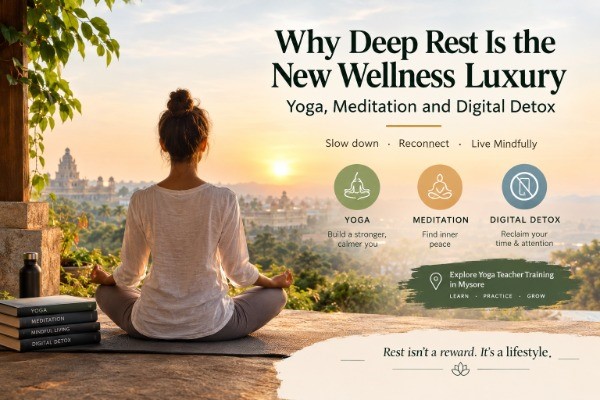
 IntroductionIn today's fast-paced world, being busy is often considered a sign of success. Between demanding work schedules, constant notifications, and endless screen time, many people struggle to find moments of genuine relaxation. As a result, deep rest is becoming an essential part of modern wellness. Yoga, meditation, and digital detox practices offer practical ways to slow down, reconnect with yourself, and create a healthier lifestyle.Mysore, known for its rich yoga tradition, attracts people interested in mindful living and personal development. Exploring the top yoga schools in Mysore for teacher training can introduce practitioners to yoga practices that extend beyond physical postures, including breathing techniques, meditation, relaxation, and yoga philosophy.Deep rest is not simply about sleeping longer or taking a break from work. It involves allowing your body and mind to recover from continuous stimulation. By making rest a priority, you can develop a more balanced relationship with productivity, health, and everyday responsibilities.What Is Deep Rest and Why Does It Matter?Deep rest is a state of relaxation that allows the body and mind to recover from physical, mental, and emotional demands. Unlike scrolling through social media or watching television, restorative activities encourage you to reduce stimulation and become more aware of the present moment.Continuous stress and insufficient recovery can affect concentration, mood, energy levels, and sleep quality. Incorporating regular relaxation into your routine may help support stress management and improve your overall sense of well-being.Deep rest can take many forms, including gentle yoga, meditation, mindful breathing, reading, and spending time in nature. The goal is not to avoid responsibilities but to create enough space to approach them with renewed energy and clarity.Why Deep Rest Is Becoming the New Wellness LuxuryTraditionally, luxury has been associated with expensive holidays, exclusive experiences, and material possessions. Today, many people are beginning to recognise the value of something simpler: uninterrupted time to relax.1. Freedom from Constant StimulationSmartphones, emails, and social media compete for our attention throughout the day. Even during breaks, we often continue consuming information instead of allowing our minds to settle. Taking time away from digital devices can create opportunities for genuine relaxation.2. Greater Awareness of Mental Well-BeingModern wellness increasingly focuses on emotional balance alongside physical fitness. Yoga and meditation encourage people to slow down, observe their thoughts, and develop greater awareness of their needs.3. A More Sustainable LifestyleRest should not be reserved for holidays or weekends. Making it part of your daily routine can help establish a healthier balance between work, exercise, relationships, and personal time.Ultimately, deep rest is a form of self-care that does not require expensive equipment or elaborate arrangements. It begins with recognising when you need to pause.How Yoga Supports Deep Rest and RelaxationYoga is widely practised for flexibility, strength, balance, and body awareness. However, its benefits extend beyond physical movement. Mindful yoga encourages practitioners to coordinate movement with breathing and pay attention to physical sensations.Gentle Hatha yoga, restorative yoga, and supported stretching can be useful options for people seeking a calmer practice. Postures such as Child's Pose and Savasana may encourage relaxation when they are appropriate for an individual's physical condition.For those interested in exploring yoga more deeply, Hatha Ashtanga yoga teacher training Mysore is a relevant option to research. Hatha yoga generally emphasises postures, breathing, and balance, while Ashtanga yoga follows a structured sequence coordinated with breathing.Both approaches can help practitioners develop discipline, body awareness, and a consistent relationship with their practice. Choosing an appropriate style depends on your experience, physical needs, and personal goals.Meditation: Creating Space for Inner CalmMeditation is another valuable practice for incorporating deep rest into everyday life. It encourages you to observe thoughts and feelings without immediately reacting to them.You do not need to meditate for an hour to begin. Five to ten minutes of consistent practice can provide an opportunity to pause and redirect your attention.Here are three simple techniques to try:Mindfulness meditation: Sit comfortably and observe your breathing. When your attention wanders, gently bring it back to the present moment.Breath awareness: Notice the natural rhythm of your inhalation and exhalation without forcing your breathing.Guided relaxation: Follow a recorded meditation that guides you through body awareness or visualisation.Meditation may support stress management, attention, and emotional awareness. Combined with yoga, it can become part of a sustainable wellness routine.Digital Detox: Reclaiming Your Time and AttentionTechnology makes communication and learning easier, but constant digital engagement can leave little room for quiet reflection. A digital detox involves intentionally reducing screen time rather than abandoning technology completely.Start by introducing small changes into your daily routine.Create screen-free mornings: Spend the first 15 minutes of your day stretching, practising yoga, or enjoying breakfast without checking your phone.Reduce unnecessary notifications: Disable alerts that frequently interrupt your concentration.Take mindful breaks: Step away from your computer during work hours and spend a few minutes walking or breathing quietly.Protect your evenings: Replace late-night scrolling with reading, gentle stretching, or meditation.Spend time outdoors: Enjoy a walk or sit in a garden without constantly checking your device.These habits can help you become more intentional about your attention and make space for activities that support well-being.Combining Yoga, Meditation, and Digital DetoxYoga, meditation, and digital detox work well together because they address different aspects of everyday stress. Yoga encourages physical awareness, meditation develops present-moment attention, and digital detox reduces unnecessary stimulation.You can combine them in a simple daily routine.Morning: Practise ten minutes of gentle yoga before checking your phone.Afternoon: Take a five-minute screen break and focus on your natural breathing.Evening: Set aside fifteen minutes for meditation, gentle stretching, or Savasana without digital distractions.Adjust the routine according to your schedule and physical needs. The objective is to create consistent opportunities for recovery rather than follow a rigid timetable.Mysore and the Journey Towards Mindful LivingMysore in Karnataka is an established destination for yoga education, attracting practitioners who want to deepen their personal practice or pursue professional teaching.When researching a certified yoga teacher training India Mysore programme, consider the curriculum, instructor experience, practical teaching sessions, and the recognition or accreditation offered by the school.A 200 hour yoga teacher training mysore course is a common starting point for aspiring yoga teachers. Such programmes typically introduce students to asanas, pranayama, meditation, yoga philosophy, anatomy, and teaching methodology.Students comparing the Best 200 hour yoga teacher training mysore options should also examine class sizes, daily schedules, accommodation, learning support, and opportunities for personal development.Although teacher training involves discipline and regular practice, rest remains important. Balancing learning with relaxation and reflection can help students develop a healthier and more sustainable approach to yoga.For anyone exploring yoga as a personal or professional journey, the experience can offer opportunities to develop self-awareness, deepen practice, and understand the importance of balanced living.Practical Ways to Make Deep Rest a HabitYou do not need to transform your lifestyle overnight to experience the value of rest. Start with small, realistic changes.Listen to your body: Recognise when you need a break instead of continually pushing yourself.Protect personal time: Establish boundaries around work and digital communication.Create a peaceful environment: Choose a comfortable space for yoga, meditation, or quiet reflection.Prioritise sleep: Maintain a consistent sleep schedule and create a relaxing evening routine.Stay flexible: Some days may allow for a longer yoga session, while others may require only a few mindful breaths.Consistency matters more than perfection. If fatigue, sleep difficulties, or emotional distress persist, seek appropriate professional guidance rather than relying exclusively on relaxation practices.Conclusion: Make Rest a Priority, Not a RewardDeep rest is becoming an important part of modern wellness because it reminds us that well-being involves more than constant activity. Yoga, meditation, and digital detox offer practical ways to slow down, reconnect with ourselves, and build healthier daily habits.The real luxury is having the time and awareness to care for yourself. Whether through a quiet morning, a mindful yoga session, or an evening without unnecessary screen time, small changes can make rest a more meaningful part of everyday life.At Yogakulam, you can explore yoga as a journey of learning, self-awareness, and mindful living. Whether you want to deepen your personal practice or explore professional yoga education in Mysore, take the first step towards a more balanced lifestyle.Discover yoga with Yogakulam and make mindful living, meaningful rest, and personal growth part of your everyday journey.
 IntroductionIn today's fast-paced world, being busy is often considered a sign of success. Between demanding work schedules, constant notifications, and endless screen time, many people struggle to find moments of genuine relaxation. As a result, deep rest is becoming an essential part of modern wellness. Yoga, meditation, and digital detox practices offer practical ways to slow down, reconnect with yourself, and create a healthier lifestyle.Mysore, known for its rich yoga tradition, attracts people interested in mindful living and personal development. Exploring the top yoga schools in Mysore for teacher training can introduce practitioners to yoga practices that extend beyond physical postures, including breathing techniques, meditation, relaxation, and yoga philosophy.Deep rest is not simply about sleeping longer or taking a break from work. It involves allowing your body and mind to recover from continuous stimulation. By making rest a priority, you can develop a more balanced relationship with productivity, health, and everyday responsibilities.What Is Deep Rest and Why Does It Matter?Deep rest is a state of relaxation that allows the body and mind to recover from physical, mental, and emotional demands. Unlike scrolling through social media or watching television, restorative activities encourage you to reduce stimulation and become more aware of the present moment.Continuous stress and insufficient recovery can affect concentration, mood, energy levels, and sleep quality. Incorporating regular relaxation into your routine may help support stress management and improve your overall sense of well-being.Deep rest can take many forms, including gentle yoga, meditation, mindful breathing, reading, and spending time in nature. The goal is not to avoid responsibilities but to create enough space to approach them with renewed energy and clarity.Why Deep Rest Is Becoming the New Wellness LuxuryTraditionally, luxury has been associated with expensive holidays, exclusive experiences, and material possessions. Today, many people are beginning to recognise the value of something simpler: uninterrupted time to relax.1. Freedom from Constant StimulationSmartphones, emails, and social media compete for our attention throughout the day. Even during breaks, we often continue consuming information instead of allowing our minds to settle. Taking time away from digital devices can create opportunities for genuine relaxation.2. Greater Awareness of Mental Well-BeingModern wellness increasingly focuses on emotional balance alongside physical fitness. Yoga and meditation encourage people to slow down, observe their thoughts, and develop greater awareness of their needs.3. A More Sustainable LifestyleRest should not be reserved for holidays or weekends. Making it part of your daily routine can help establish a healthier balance between work, exercise, relationships, and personal time.Ultimately, deep rest is a form of self-care that does not require expensive equipment or elaborate arrangements. It begins with recognising when you need to pause.How Yoga Supports Deep Rest and RelaxationYoga is widely practised for flexibility, strength, balance, and body awareness. However, its benefits extend beyond physical movement. Mindful yoga encourages practitioners to coordinate movement with breathing and pay attention to physical sensations.Gentle Hatha yoga, restorative yoga, and supported stretching can be useful options for people seeking a calmer practice. Postures such as Child's Pose and Savasana may encourage relaxation when they are appropriate for an individual's physical condition.For those interested in exploring yoga more deeply, Hatha Ashtanga yoga teacher training Mysore is a relevant option to research. Hatha yoga generally emphasises postures, breathing, and balance, while Ashtanga yoga follows a structured sequence coordinated with breathing.Both approaches can help practitioners develop discipline, body awareness, and a consistent relationship with their practice. Choosing an appropriate style depends on your experience, physical needs, and personal goals.Meditation: Creating Space for Inner CalmMeditation is another valuable practice for incorporating deep rest into everyday life. It encourages you to observe thoughts and feelings without immediately reacting to them.You do not need to meditate for an hour to begin. Five to ten minutes of consistent practice can provide an opportunity to pause and redirect your attention.Here are three simple techniques to try:Mindfulness meditation: Sit comfortably and observe your breathing. When your attention wanders, gently bring it back to the present moment.Breath awareness: Notice the natural rhythm of your inhalation and exhalation without forcing your breathing.Guided relaxation: Follow a recorded meditation that guides you through body awareness or visualisation.Meditation may support stress management, attention, and emotional awareness. Combined with yoga, it can become part of a sustainable wellness routine.Digital Detox: Reclaiming Your Time and AttentionTechnology makes communication and learning easier, but constant digital engagement can leave little room for quiet reflection. A digital detox involves intentionally reducing screen time rather than abandoning technology completely.Start by introducing small changes into your daily routine.Create screen-free mornings: Spend the first 15 minutes of your day stretching, practising yoga, or enjoying breakfast without checking your phone.Reduce unnecessary notifications: Disable alerts that frequently interrupt your concentration.Take mindful breaks: Step away from your computer during work hours and spend a few minutes walking or breathing quietly.Protect your evenings: Replace late-night scrolling with reading, gentle stretching, or meditation.Spend time outdoors: Enjoy a walk or sit in a garden without constantly checking your device.These habits can help you become more intentional about your attention and make space for activities that support well-being.Combining Yoga, Meditation, and Digital DetoxYoga, meditation, and digital detox work well together because they address different aspects of everyday stress. Yoga encourages physical awareness, meditation develops present-moment attention, and digital detox reduces unnecessary stimulation.You can combine them in a simple daily routine.Morning: Practise ten minutes of gentle yoga before checking your phone.Afternoon: Take a five-minute screen break and focus on your natural breathing.Evening: Set aside fifteen minutes for meditation, gentle stretching, or Savasana without digital distractions.Adjust the routine according to your schedule and physical needs. The objective is to create consistent opportunities for recovery rather than follow a rigid timetable.Mysore and the Journey Towards Mindful LivingMysore in Karnataka is an established destination for yoga education, attracting practitioners who want to deepen their personal practice or pursue professional teaching.When researching a certified yoga teacher training India Mysore programme, consider the curriculum, instructor experience, practical teaching sessions, and the recognition or accreditation offered by the school.A 200 hour yoga teacher training mysore course is a common starting point for aspiring yoga teachers. Such programmes typically introduce students to asanas, pranayama, meditation, yoga philosophy, anatomy, and teaching methodology.Students comparing the Best 200 hour yoga teacher training mysore options should also examine class sizes, daily schedules, accommodation, learning support, and opportunities for personal development.Although teacher training involves discipline and regular practice, rest remains important. Balancing learning with relaxation and reflection can help students develop a healthier and more sustainable approach to yoga.For anyone exploring yoga as a personal or professional journey, the experience can offer opportunities to develop self-awareness, deepen practice, and understand the importance of balanced living.Practical Ways to Make Deep Rest a HabitYou do not need to transform your lifestyle overnight to experience the value of rest. Start with small, realistic changes.Listen to your body: Recognise when you need a break instead of continually pushing yourself.Protect personal time: Establish boundaries around work and digital communication.Create a peaceful environment: Choose a comfortable space for yoga, meditation, or quiet reflection.Prioritise sleep: Maintain a consistent sleep schedule and create a relaxing evening routine.Stay flexible: Some days may allow for a longer yoga session, while others may require only a few mindful breaths.Consistency matters more than perfection. If fatigue, sleep difficulties, or emotional distress persist, seek appropriate professional guidance rather than relying exclusively on relaxation practices.Conclusion: Make Rest a Priority, Not a RewardDeep rest is becoming an important part of modern wellness because it reminds us that well-being involves more than constant activity. Yoga, meditation, and digital detox offer practical ways to slow down, reconnect with ourselves, and build healthier daily habits.The real luxury is having the time and awareness to care for yourself. Whether through a quiet morning, a mindful yoga session, or an evening without unnecessary screen time, small changes can make rest a more meaningful part of everyday life.At Yogakulam, you can explore yoga as a journey of learning, self-awareness, and mindful living. Whether you want to deepen your personal practice or explore professional yoga education in Mysore, take the first step towards a more balanced lifestyle.Discover yoga with Yogakulam and make mindful living, meaningful rest, and personal growth part of your everyday journey.
Sat, 24 October 26 : 7:10 : yogakulam academy
Visit / Join Group to Reply