


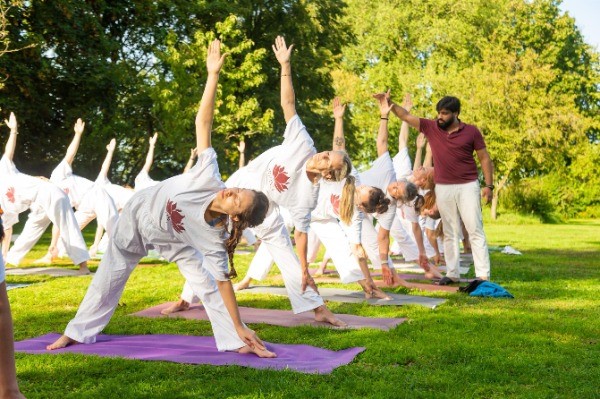
 In a Hatha yoga practice, you will engage in steady postures, mindful breathing, and precise alignment to enhance flexibility, strength, and stress resilience.This approach focuses on the harmonious connection between movement and breath, preparing both body and mind for sustained effort. Throughout the practice, you will explore a variety of standing, seated, and supine poses, with specific cues for joint alignment and weight distribution to minimize strain.Additionally, you will learn simple breath techniques and experience guided relaxation, both of which serve to soothe the nervous system.As you maintain a consistent practice, you can expect to see measurable improvements in your physical capabilities and a deeper understanding of your skills, encouraging you to delve further into your yoga journey.Principles and Benefits of Hatha YogaAlthough Hatha Yoga developed centuries ago as a system to prepare the body and mind for deeper spiritual practices, you'll find its principles remain practical and evidence-informed for modern well‑being, emphasizing balance, alignment, breath control, and mindful attention; these fundamental elements work together to improve flexibility, strength, posture, and respiratory efficiency, while also reducing stress responses and enhancing body awareness. You’ll learn techniques that cultivate a reliable mind body connection, using deliberate breath and movement to modulate nervous system activity, promote stress reduction, improve interoception, and support adaptability, while fostering consistent practice habits that translate into daily functional benefits.Foundational Poses and AlignmentBecause proper alignment creates a safe and efficient foundation for movement, you'll begin through learning a small set of foundational Hatha poses that collectively teach balance, postural awareness, and the mechanics of breath-synchronized motion. You practice standing, seated, and supine postures, each introduced with clear alignment cues that explain joint stacking, neutral spine, and weight distribution, so you reduce strain and improve stability. Foundational sequences progress logically, linking simple poses into ordered patterns that develop strength, flexibility, and proprioception, while teachers adjust alignment cues to individual anatomy, ensuring each pose serves functional improvement, allowing steady, measurable progress in your practice.Breathwork and Relaxation PracticesHaving established reliable alignment and posture through foundational poses, you'll now bring attention to how you breathe, since breathwork and relaxation practices directly influence movement efficiency, nervous system balance, and general comfort in each posture. You’ll learn simple breath techniques, like diaphragmatic breathing and ujjayi, which lengthen inhales and exhales, coordinate with movement, and reduce muscular tension. Combine these with relaxation methods, such as progressive muscle release and guided body scans, to lower sympathetic activation and promote recovery. Practice gradually, observe sensations, and adapt pace and depth to your capacity, ensuring safety, consistency, and measurable improvement in steadiness and comfort.ConclusionYou've learned practical principles and measurable benefits of Hatha Yoga, and you've practiced foundational poses with correct alignment. You'll also discover that maintaining a steady breath and embracing deliberate relaxation can significantly transform effort into ease. This contrast between exertion and surrender is essential, as it aids in developing both strength and flexibility while fostering mental clarity and reducing stress levels. Therefore, continue to apply alignment, pranayama (breath control), and restorative techniques consistently. As you observe gradual improvements, remember to adjust your practice to meet your individual needs, allowing for a more personalized and fulfilling yoga journey.Learn a 200-hour Hatha Yoga Teacher Training Course with an authentic Yoga Ashram in Europe at https://www.arhantayoga.org/yoga-teacher-training-europe/
  In a Hatha yoga practice, you will engage in steady postures, mindful breathing, and precise alignment to enhance flexibility, strength, and stress resilience.This approach focuses on the harmonious connection between movement and breath, preparing both body and mind for sustained effort. Throughout the practice, you will explore a variety of standing, seated, and supine poses, with specific cues for joint alignment and weight distribution to minimize strain.Additionally, you will learn simple breath techniques and experience guided relaxation, both of which serve to soothe the nervous system.As you maintain a consistent practice, you can expect to see measurable improvements in your physical capabilities and a deeper understanding of your skills, encouraging you to delve further into your yoga journey.Principles and Benefits of Hatha YogaAlthough Hatha Yoga developed centuries ago as a system to prepare the body and mind for deeper spiritual practices, you'll find its principles remain practical and evidence-informed for modern well‑being, emphasizing balance, alignment, breath control, and mindful attention; these fundamental elements work together to improve flexibility, strength, posture, and respiratory efficiency, while also reducing stress responses and enhancing body awareness. You’ll learn techniques that cultivate a reliable mind body connection, using deliberate breath and movement to modulate nervous system activity, promote stress reduction, improve interoception, and support adaptability, while fostering consistent practice habits that translate into daily functional benefits.Foundational Poses and AlignmentBecause proper alignment creates a safe and efficient foundation for movement, you'll begin through learning a small set of foundational Hatha poses that collectively teach balance, postural awareness, and the mechanics of breath-synchronized motion. You practice standing, seated, and supine postures, each introduced with clear alignment cues that explain joint stacking, neutral spine, and weight distribution, so you reduce strain and improve stability. Foundational sequences progress logically, linking simple poses into ordered patterns that develop strength, flexibility, and proprioception, while teachers adjust alignment cues to individual anatomy, ensuring each pose serves functional improvement, allowing steady, measurable progress in your practice.Breathwork and Relaxation PracticesHaving established reliable alignment and posture through foundational poses, you'll now bring attention to how you breathe, since breathwork and relaxation practices directly influence movement efficiency, nervous system balance, and general comfort in each posture. You’ll learn simple breath techniques, like diaphragmatic breathing and ujjayi, which lengthen inhales and exhales, coordinate with movement, and reduce muscular tension. Combine these with relaxation methods, such as progressive muscle release and guided body scans, to lower sympathetic activation and promote recovery. Practice gradually, observe sensations, and adapt pace and depth to your capacity, ensuring safety, consistency, and measurable improvement in steadiness and comfort.ConclusionYou've learned practical principles and measurable benefits of Hatha Yoga, and you've practiced foundational poses with correct alignment. You'll also discover that maintaining a steady breath and embracing deliberate relaxation can significantly transform effort into ease. This contrast between exertion and surrender is essential, as it aids in developing both strength and flexibility while fostering mental clarity and reducing stress levels. Therefore, continue to apply alignment, pranayama (breath control), and restorative techniques consistently. As you observe gradual improvements, remember to adjust your practice to meet your individual needs, allowing for a more personalized and fulfilling yoga journey.Learn a 200-hour Hatha Yoga Teacher Training Course with an authentic Yoga Ashram in Europe at https://www.arhantayoga.org/yoga-teacher-training-europe/
 Wed, 17 December 25 : 9:12 : David Cook
Visit / Join Group to Reply